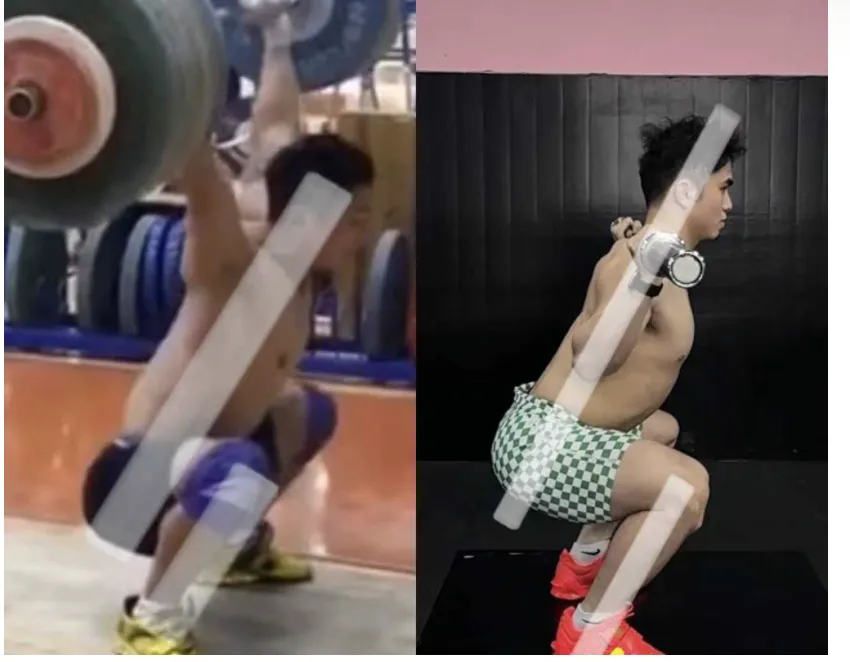
Gaby’s Tea Time — Real Squat Depth
Most lifters start with the same goal: squat as deep as possible—“ass to grass”.
Then the internet delivers endless mobility drills to help you get there.
But depth is not a badge. Under load, depth has a cost. The real question is:
What depth can you own without compensation?
Today, we’ll define what “real squat depth” is, and how to spot when you’ve crossed the line into fake depth.
First principles: what is a squat?
A squat is a bilateral movement where both feet stay grounded while the body lowers and rises through coordinated joint flexion and extension—primarily at the hips, knees, and ankles—while maintaining balance over the midfoot.
So the target is not “lower”. The target is stable and centred.

(No matter if it's an OHS or a back squat, it’s the same)
The squat mechanism (why hips and ankles must work together)
Hips create depth. They are the main depth generator because the hip is a highly mobile joint and carries large muscle groups built to load and extend.
Ankles protect balance. The ankles must allow the shin to travel forward so your centre of mass stays stacked over the midfoot.
If the hips “go” but the ankles don’t, you’ll sit back. That shifts pressure towards the heel, pulls the torso out of position, and turns the lift into a compensation pattern.
What happens when you lose balance
Once you shift backwards, your body still tries to keep the bar over the foot. To do that, it borrows motion somewhere else—usually from the lumbar spine.
This is where “depth” becomes expensive:
pelvis tucks under,
lumbar flexion increases,
the spine takes load it wasn’t meant to take.
And that’s what so called butt wink.
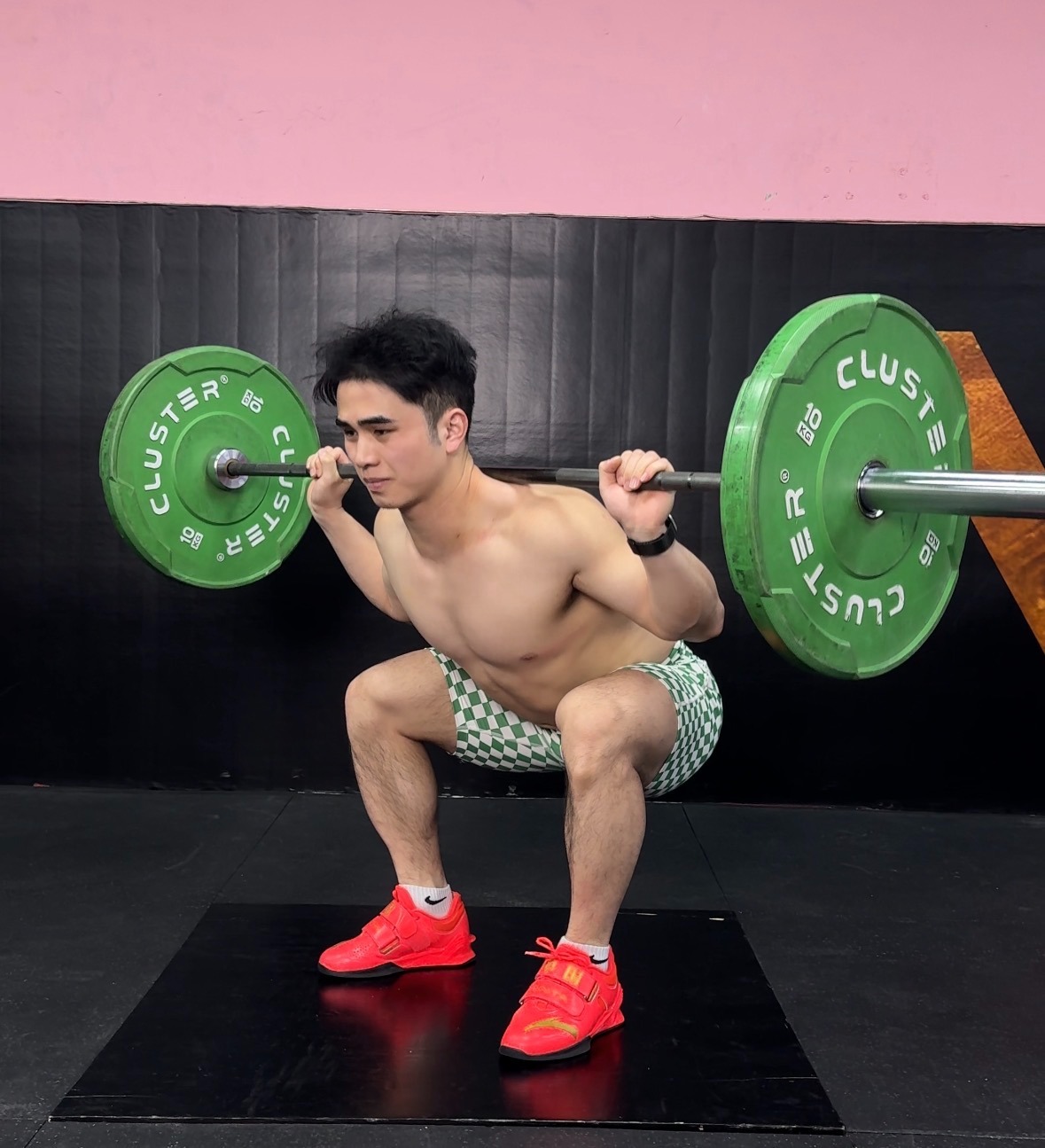
(Once your ankle blocks, your lumbar spine takes over.)
Your real depth (a simple rule)
I don’t care whether your hips go below your knees.
Your depth is where you can stay balanced over midfoot without your ankles shutting down and without your spine borrowing the work.
Practical signs you’ve hit your real depth:
You feel pressure shift into the toes,while heels are floating. ,
Lower back pressure or knee pressure.
So keep your ankle engaged with your hips, and let your torso parallel to your shin.


